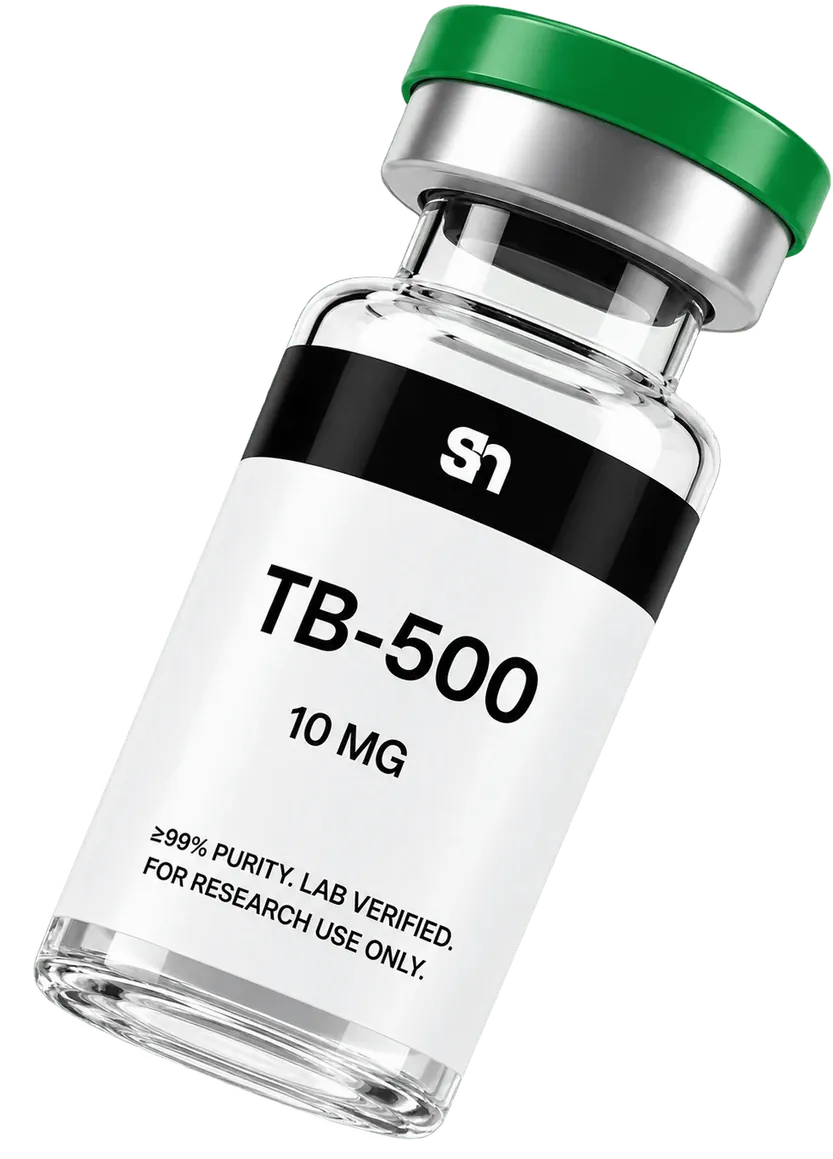
Peptide vial sizes follow an international glass standard, and the size of the glass tells you almost nothing about how much peptide sits inside it.
Last updated 27 October 2026 · Written by the SHLabz research team
Two vials can look identical on a bench and still hold very different amounts of material. Equally, a large vial can contain a small cake. That gap between the glass and its contents confuses many first-time buyers, so it helps to know how the industry names its containers.
This article explains the standard formats, what “brimful capacity” means, why fill mass and vial volume are separate numbers, and what the empty space above a solution does. It stays with laboratory handling throughout.
Quick answer: Peptide vial sizes describe the glass, not the peptide. Most vials follow ISO 8362-1 formats such as 2R or 6R, and data sheets quote brimful capacity, which is more than anyone fills. The milligram figure on the label and the measured content on the batch certificate tell you what is inside. Choose a size by planned use, not by how big the glass looks.
How Peptide Vial Sizes Are Named
Most injection-style glass vials follow ISO 8362-1. According to its scope, the standard specifies the form, dimensions and capacities of glass vials made from tubing. It also covers the glass itself and the performance the containers must meet, whether colourless or amber, borosilicate or soda-lime.
In practice, manufacturers refer to these formats by short codes such as 2R, 4R, 6R and 10R. One glass maker, for example, lists tubular vials from 2R up to 100R, with clear and amber options. The code names a defined shape, so a 2R from one factory should match a 2R from another closely enough to fit the same stoppers and caps.
Neck size follows the format too. That same catalogue puts 2R and 4R vials on a 13 mm neck, while 6R and larger formats use a 20 mm neck. Consequently, a stopper or crimp cap made for one group will not fit the other.
Brimful Capacity Versus Working Volume
Specification sheets usually quote a vial’s brimful capacity. That is the volume the glass holds when someone fills it to the very top of the neck. Nobody works at that level, because a stopper needs room and a liquid needs space to move.
Two real examples show the scale. One laboratory glass supplier lists its 2R vial at a brimful capacity of 4 mL, with a 16 mm diameter, a 35 mm height and a 13 mm crimp neck. Its 6R vial reaches 10 mL brimful, at 22 mm wide and 40 mm tall, with a 20 mm crimp neck.
So a vial that people loosely call a “3 ml vial” may carry a different brimful figure on its data sheet. Similarly, informal names in shops and forums rarely match the standard codes. When the exact geometry matters, the manufacturer’s specification is the document to check.
Why Fill Mass and Vial Volume Differ
The milligram figure on a peptide label describes the material, not the container. A few milligrams of lyophilised peptide form a small, light cake that occupies only a fraction of the glass. Therefore a 5 mg vial and a 10 mg vial can share the same format and look nearly the same from across a room.
Freeze-drying also shapes the choice. A manufacturer picks a vial that suits the drying process and the cake it produces, rather than one that matches the fill mass. In addition, some products contain bulking excipients that add visible volume, while others contain the peptide alone.
The practical lesson is simple. Read the label and the batch certificate for content, and treat the glass as packaging. A larger vial is not a sign of more material, and a small cake is not a sign of less.
Peptide Vial Sizes and the Certificate
If the glass cannot tell you the contents, the certificate can. A good certificate of analysis reports a measured content for the batch, alongside purity and identity. That measured figure is the closest thing to a true “size” for the material inside.
Our published certificates show how this works in practice. The GHK-Cu 100 mg batch CU100/2026-0310 reports a measured content of 109.58 mg at 99.889% purity. Meanwhile, the MOTS-C 10 mg batch MS10/2025-1010 reports 10.60 mg, and the BPC-157 10 mg batch BC10/2026-0310 reports 9.72 mg.
So measured content can sit a little above or a little below the label figure. Neither direction says anything about the vial format. Each figure comes from a laboratory measurement of that batch, which is why the batch number on the vial must match the certificate.
Purity and content are also different numbers. HPLC purity is the share of the detected material that is the target peptide. Content, by contrast, is how much of it the laboratory found. Our certificate of analysis guide explains both, and every published certificate sits on the lab results page.
What Headspace Means for Reconstitution
Headspace is the gas-filled volume above the cake or the liquid. In a sealed vial it may hold air, nitrogen or a partial vacuum, depending on how the vial was closed. Once a lab adds diluent, the liquid takes up part of that space and the rest stays as headspace.
That remaining space matters for mixing. Gentle swirling needs room for the liquid to move, and a vial filled close to its brimful level leaves very little. As a result, the useful liquid volume in any vial sits well below its brimful capacity.
Headspace also sets the area where liquid meets gas. Our storage and handling guide explains why vigorous shaking at that interface is best avoided. Meanwhile, the volume of diluent a lab adds is a concentration decision, which the reconstitution guide covers in general terms.
Reconstitution Maths for Different Peptide Vial Sizes
Concentration is the amount divided by the volume of diluent. For example, 10 mg in 2 mL gives 5 mg/mL. Similarly, 40 mg in 2 mL gives 20 mg/mL, and 40 mg in 4 mL brings it back to 10 mg/mL.
The glass sets an upper limit on that volume. A 2R vial holds about 4 mL brimful, so 2 mL of diluent fills roughly half of it and leaves room to swirl. In contrast, a 6R vial, at about 10 mL brimful, leaves far more headspace for the same volume. Always write the result in mg/mL on your own label.
Choosing Between Peptide Vial Sizes
Many compounds come in more than one fill. In the SHLabz catalogue, for instance, SH-R comes in 10, 15, 20, 30 and 40 mg vials. MOTS-C comes in 10 mg and 40 mg, and GHK-CU in 50 mg and 100 mg.
Choosing between peptide vial sizes is a planning question. A larger fill suits a lab that will use the material in one series of experiments. A smaller fill, however, suits pilot work, or a plan where each vial is reconstituted only when needed.
Think about the solution as well as the powder. Once reconstituted, a vial needs 2–8°C, and every withdrawal pierces the stopper again. Several smaller vials can therefore mean fewer days that any one solution sits open. Either way, decide on volumes and timings under your own procedures.
Glass, Stoppers and Colour
Size is only one part of the container. The DWK 2R vial cited here, for example, is made from Type I borosilicate tubing. ISO 8362-1 also covers both colourless and amber glass.
Amber glass filters some light, which matters for light-sensitive material. Even so, keeping any vial in its box or a dark cupboard does the same job. Our guide to peptide light sensitivity explains why.
Stoppers follow the neck size. Consequently, a 13 mm stopper fits 2R and 4R vials, while 6R and larger formats need a 20 mm closure. That detail matters when a lab orders its own caps or septa.
Diluent Vials Come in Sizes Too
Bacteriostatic water follows the same logic. SHLabz stocks it in a 3 ml vial and a 10 ml vial. Here the stated figure describes the liquid inside, which is a different kind of number from a peptide’s milligram content.
Labs choose between them on practical grounds, such as how many preparations they plan and how long an opened diluent vial stays in use under their own procedures.
Storing Every Peptide Vial Size
Storage rules do not change across peptide vial sizes. Sealed lyophilised powder is stable at room temperature, kept dry, sealed and out of direct light. Cold storage is possible but never required. In fact, moving a vial repeatedly between cold and warm risks condensation inside it.
After reconstitution, refrigerate the solution at 2–8°C and never freeze it. Then label the vial with the batch number, date, diluent and concentration. Finally, log where each vial lives, so nobody opens a second one by mistake.
A Checklist Before Choosing Peptide Vial Sizes
- Read the label amount. It states the material, not the glass.
- Find the batch certificate. Look for measured content as well as purity.
- Check identity. A mass result should match the stated compound.
- Plan the volume. Work out the mg/mL you need before adding diluent.
- Leave headspace. Keep the liquid well below brimful so it can swirl.
- Match closures. Check the neck size before ordering stoppers or caps.
- Store by state. Powder dry and dark at room temperature; solution at 2–8°C.
Where SHLabz Fits
SHLabz supplies its peptides as lyophilised vials, each labelled with its compound and stated content. Sealed lyophilised powder does not require cold chain. SHLabz holds the whole range to it anyway, because it removes a variable and the handling difference is small. Every UAE order therefore travels with cold-chain delivery.
An independent laboratory tests every batch, and SHLabz publishes certificates by batch on the lab results page as they are issued. For any vial, the label and certificate describe the contents, whatever the size of the glass.
The Short Version
In short, peptide vial sizes follow ISO 8362-1 formats such as 2R and 6R, and data sheets quote brimful capacity, which is more than anyone fills. A 2R vial, for instance, holds about 4 mL brimful.
Fill mass and vial volume are separate numbers, so read the label for content. Headspace above a solution gives room for gentle mixing, which is why working volumes stay well below brimful.
Frequently Asked Questions
Why is my 5 mg vial the same size as a 10 mg vial? Because the glass is packaging and the milligram figure describes the peptide. A small lyophilised cake fits comfortably in a standard format, whatever its exact mass.
What does 2R mean on a vial specification? It is a format code used for tubular glass vials under ISO 8362-1. One supplier lists its 2R at 4 mL brimful with a 13 mm neck.
What is brimful capacity? It is the volume a vial holds when filled to the very top. Working volumes sit well below it, since a stopper needs room and liquid needs space to swirl.
Do peptide vial sizes affect stability? Not in any simple way that a buyer can read from the glass. Storage conditions matter far more: sealed powder keeps at room temperature when dry and out of direct light, and solutions belong at 2–8°C.
Can I fill a vial to the neck when reconstituting? It leaves almost no headspace for gentle swirling. Most labs keep the liquid well below brimful and follow their own procedures for volume.
Why does the certificate show more milligrams than the label? The label gives a nominal amount, while the certificate reports a measured one. Small differences either way are normal, and the certificate is the test result.
Which of the peptide vial sizes should a lab choose? It depends on the planned work. Larger fills suit one series of experiments, while smaller fills suit pilot work or staggered reconstitution.
References
- ISO 8362-1:2018 Injection containers and accessories — Part 1: Injection vials made of glass tubing — ISO, 2018. Scope: form, dimensions and capacities of tubular glass vials.
- WHEATON 2R, Clear, European Blowback, ISO 8362-1 — DWK Life Sciences. A 2R vial at 4 mL brimful, 16 × 35 mm, 13 mm crimp.
- WHEATON 6R, Clear, European Blowback, ISO 8362-1 — DWK Life Sciences. A 6R vial at 10 mL brimful, 22 × 40 mm, 20 mm crimp.
- Injectable Vials — Tubular Glass — SGD Pharma. Formats from 2R to 100R; 13 mm neck for 2R and 4R, 20 mm for 6R and up.
Some of these references come from companies working in this field rather than from independent bodies. The underlying chemistry is uncontroversial, though anyone relying on specific figures should confirm them against their own certificates.
Finally, the catalogue lists each compound with its stated content per vial, which is the number that matters.
This article is provided for general research and educational purposes only. All SHLabz products are sold strictly for laboratory research use and are not intended for human or veterinary consumption, diagnosis, treatment, or prevention of any disease. Nothing in this article constitutes medical advice. Always consult a qualified professional and comply with applicable local regulations regarding the handling and use of research compounds.