
Peptide light sensitivity is a chemistry question about a handful of residues, and it has a simple storage answer.
Last updated 27 October 2026 · Written by the SHLabz research team
Quick answer: Peptide light sensitivity comes mainly from a few residues, such as tryptophan, tyrosine, histidine, cysteine and methionine. Light damages them directly or through reactive oxygen made by other molecules. Solutions are far more exposed than dry powder. Keep sealed vials boxed at room temperature, and keep reconstituted material dark at 2–8°C.
Most research peptide labels say to keep the material out of direct light. That instruction is short, so it is easy to skim past. However, it rests on well-studied chemistry, and knowing which part of a sequence reacts helps a lab judge how careful it needs to be.
This article covers which amino acids absorb light and how ordinary room light can still cause harm through other molecules. It then explains why solutions are more exposed than powder, and what glass and packaging can and cannot do.
Which Residues Absorb Light
Pattison, Rahmanto and Davies reviewed protein photo-oxidation in 2012. They identify the side chains of tryptophan, tyrosine, phenylalanine, histidine, cysteine and cystine as the major light-absorbing groups in proteins. When these groups absorb UV light, they form excited states and can photo-ionise, which starts reactions that damage the chain.
The same review describes a second, indirect route. Singlet oxygen, a reactive form of oxygen, attacks tryptophan, tyrosine, histidine, cystine, cysteine and methionine. Methionine is not one of the main absorbers, yet it oxidises to methionine sulfoxide once a sensitiser does the absorbing. So a sequence without tryptophan can still react to light if it carries methionine or cysteine.
Room Light Matters More Than It Seems
Ordinary lab light is far weaker than sunlight, but it is not harmless. Kaiser and colleagues, in a 2022 review, give exposure levels from about 1,000 lux in laboratories to 130,000 lux in direct sunlight. They also point out that UV-A and visible light dominate these everyday conditions.
That detail matters because tryptophan and tyrosine absorb mainly in the UV-B and UV-C regions. As a result, the authors argue that most photo-oxidation in protein formulations comes from other sensitisers rather than from the protein itself. Those sensitisers absorb longer wavelengths and pass the energy on as reactive oxygen species. Trace metals can then keep the cycle going. In other words, a clean sequence in an impure solution can still degrade under visible light. For peptide light sensitivity, then, the question is not only what the sequence contains. It is also what else sits in the solution with it.
Peptide Light Sensitivity in Powder and Solution
Physical state makes a large difference. In solution, molecules move freely, oxygen dissolves in the water, and reactive species reach a residue easily. By contrast, a dry cake restricts movement, and only the outer surface of the powder sees much light.
Kim and colleagues surveyed 557 biotechnology formulations licensed by the US FDA, publishing in 2023. Overall, about 82% carried a protect-from-light recommendation. Among liquid formulations the figure was about 95%, compared with about 57% for lyophilised powders. That pattern fits the chemistry: drying reduces light sensitivity, but it does not remove it.
Myths About Peptide Light Sensitivity
Several common assumptions about peptide light sensitivity do not survive a look at the literature. Each one below sounds reasonable, yet the studies cited in this article point the other way.
- “Only sunlight matters.” Lab lighting is far weaker, yet Kaiser and colleagues show that visible light can still drive oxidation through sensitisers.
- “No tryptophan means no risk.” Methionine and cysteine react with singlet oxygen, even though they absorb little light themselves.
- “Powder is immune.” More than half of the licensed lyophilised products in the Kim survey still carry a light warning.
- “Clear glass is enough.” Clear glass lets light through, so the carton or cupboard does the protecting.
- “Damage would be visible.” Most oxidation products leave no visible trace in the vial.
What Glass and Packaging Do
Pharmaceutical testing takes light seriously. The ICH Q1B guideline sets confirmatory exposure of at least 1.2 million lux hours, plus 200 watt hours per square metre of near-UV energy. It tests the fully exposed product first, then the product in its immediate pack, then in its marketing pack. Testing continues until the results show adequate protection, so the outer carton counts as a layer of defence alongside the vial.
Amber glass is one answer. Schott’s product literature for its amber vials specifies no more than 13% transmission between 290 and 450 nm, while letting more red light through. Clear glass does not filter in that way. Accordingly, a clear vial relies on its carton or its storage place to stay dark.
Practical Habits for Peptide Light Sensitivity
- Keep vials boxed or in a closed cupboard. Darkness costs nothing and protects every residue at once.
- Avoid windowsills and benches in sunlight. Direct sun can be more than a hundred times brighter than typical lab lighting.
- Work briskly under bench lights. A few minutes of exposure during preparation matters far less than days on an open shelf.
- Give solutions more care than powder. After reconstitution, store at 2–8°C; a closed fridge is dark as well as cold.
- Check the sequence. Tryptophan, methionine, cysteine or histidine in a sequence is a reason for the strictest habits.
Peptide Light Sensitivity and the Certificate
A certificate of analysis is a snapshot. It shows the state of one batch on the day the laboratory tested it. The SHLabz certificates on our lab results page, for example, carry test dates between November 2025 and August 2026, and each one links to the laboratory’s own verification page.
Light damage after that date will not appear on the paper. However, the same methods can detect it if anyone retests the material. Kaiser and colleagues describe how techniques such as HPLC and LC–MS separate oxidised species before analysis.
Mass spectrometry is especially telling. When methionine oxidises to methionine sulfoxide, the molecule gains one oxygen atom, so its mass rises by about 16 daltons. A retest that shows a new peak 16 daltons above the expected mass therefore points to oxidation. Meanwhile, HPLC would show the oxidised form as a separate peak, which lowers the purity figure.
That is why a certificate and good storage work together. The certificate confirms the starting point, and dark storage protects it. Our certificate of analysis guide explains each line of the document.
Handling Light-Sensitive Material from Arrival
Good habits start when the parcel opens. First, check that the vial’s batch number matches the paperwork. Next, put the vial back in its carton, or into a closed cupboard, rather than on an open shelf.
Reconstitution is the moment when peptide light sensitivity matters most, because the powder becomes a solution. So prepare everything before the cap comes off, work briskly, and return the vial to the dark straight afterwards. A 10 mg vial dissolved in 2 mL gives 5 mg/mL, and that figure belongs on the label with the date and the batch.
After reconstitution, store the solution at 2–8°C and never freeze it. Finally, note in your log how long the solution spent out of the refrigerator, especially for sequences with tryptophan or methionine.
A Checklist for Peptide Light Sensitivity
- Read the sequence. Flag tryptophan, tyrosine, histidine, cysteine and methionine.
- Check the storage note. Look for “protect from light” on the label or product page.
- Keep the carton. Treat it as part of the packaging, not as rubbish.
- Choose a dark place. Use a closed cupboard for powder and a closed refrigerator for solutions.
- Limit bench time. Prepare in advance so the vial spends minutes, not hours, under lights.
- Match the batch. Confirm the certificate’s batch number matches the vial.
- Log exposure. Note the date of reconstitution and any long periods out of storage.
Where SHLabz Fits
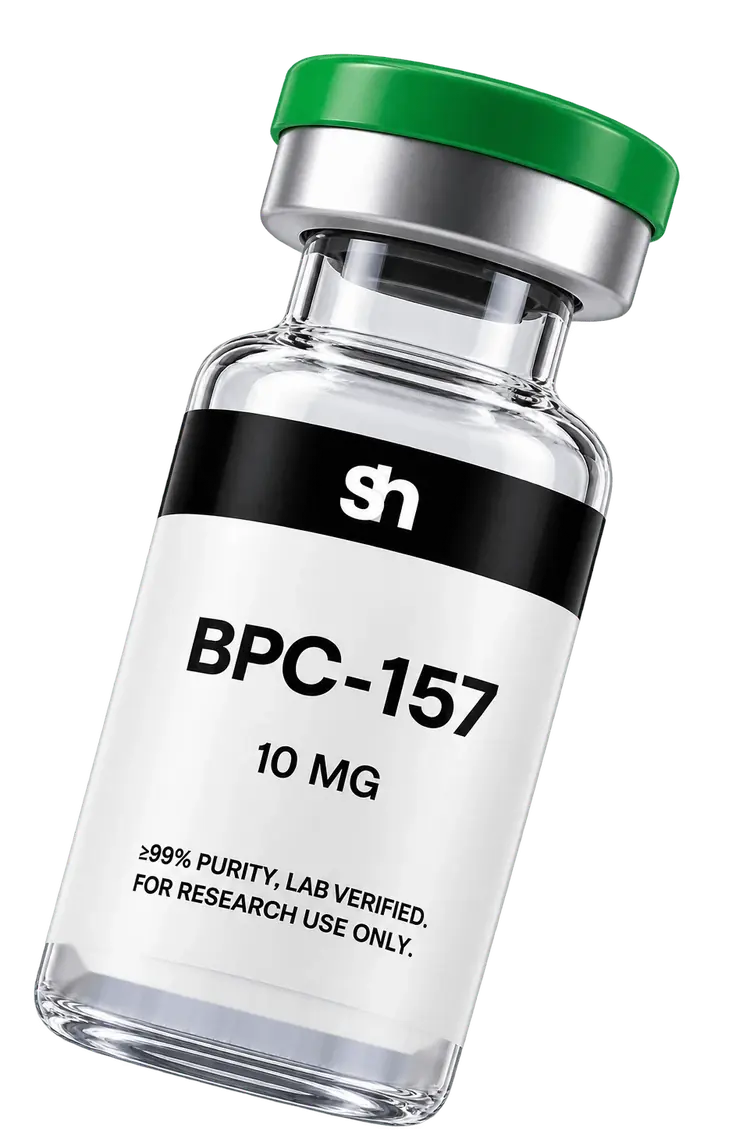
SHLabz supplies its compounds as lyophilised powder in clear glass vials. Sealed powder is stable at room temperature when kept dry and out of direct light, so the original box or a closed cupboard provides the darkness that clear glass cannot. Cold storage is possible, but it is not a requirement.
Every UAE order also travels with cold-chain delivery. Sealed lyophilised powder does not require cold chain; SHLabz holds the whole range to it anyway, because it removes a variable and the handling difference is small. Pre-mixed nasal sprays hold a solution from filling, so they need 2–8°C from arrival and ship within the UAE only. For the wider picture, our storage and handling guide covers each format.
The Short Version
In short, peptide light sensitivity comes from a few residues — tryptophan, tyrosine, methionine, cysteine and histidine among them — plus any impurity that absorbs light and passes the energy on.
Solutions are far more exposed than dry powder, although powder is not immune. Darkness is the cheapest protection, so keep sealed vials boxed at room temperature and reconstituted material dark at 2–8°C.
Frequently Asked Questions
Does lyophilised powder need to stay in the dark? Keep it out of direct light, yes. Licensed lyophilised products carry light warnings less often than liquids, but more than half still do. A box or closed cupboard is enough.
Which amino acids drive peptide light sensitivity? Tryptophan, tyrosine, phenylalanine, histidine, cysteine and cystine absorb UV light directly. Methionine, along with several of those, reacts with singlet oxygen that other light-absorbing molecules produce.
Is ordinary room light a problem? Over long periods, it can be. Visible light can drive oxidation through sensitisers in a solution, even though lab lighting is far weaker than sunlight. Brief exposure while working matters much less than storage on an open shelf.
Does amber glass replace a box? Amber glass filters much of the UV and short-wave visible range, so it reduces exposure. Even so, ICH Q1B tests the immediate pack and the marketing pack in turn, which treats both as layers of protection.
Does a certificate prove a vial has not seen light? No. A certificate shows the batch on its test date. Anything that happens afterwards depends on storage, which is why the box and a dark cupboard matter.
How does light damage show up in testing? Oxidised forms appear as separate HPLC peaks and as heavier masses in mass spectrometry. Methionine sulfoxide, for instance, sits about 16 daltons above the original.
Can you see light damage in a vial? Usually not. Oxidation products such as methionine sulfoxide leave no visible trace, so only analytical methods like HPLC or mass spectrometry reveal them. That is why prevention matters more than inspection.
References
- Photo-oxidation of proteins — Pattison, Rahmanto and Davies, Photochemical & Photobiological Sciences, 2012. The main light-absorbing residues and the singlet oxygen route.
- Photo-Oxidation of Therapeutic Protein Formulations: From Radical Formation to Analytical Techniques — Kaiser et al., Pharmaceutics, 2022. Typical light levels, UV-A and visible exposure, and non-protein sensitisers.
- Trends in Light and Temperature Sensitivity Recommendations among Licensed Biotechnology Drug Products — Kim et al., Pharmaceutical Research, 2023. Protect-from-light labelling in liquid and lyophilised formulations.
- Note for Guidance on the Photostability Testing of New Active Substances and Medicinal Products (CPMP/ICH/279/95) — European Medicines Agency, 1998. Confirmatory exposure conditions and the pack-by-pack testing sequence.
- EVERIC® amber product literature — Schott, 2026. Light transmission specification for amber pharmaceutical vials.
Some of these references come from companies working in this field rather than from independent bodies. The underlying chemistry is uncontroversial, though anyone relying on specific figures should confirm them against their own certificates.
Meanwhile, if you would like to see which compounds are on the shelf now, the catalogue lists each one by format.
This article is provided for general research and educational purposes only. All SHLabz products are sold strictly for laboratory research use and are not intended for human or veterinary consumption, diagnosis, treatment, or prevention of any disease. Nothing in this article constitutes medical advice. Always consult a qualified professional and comply with applicable local regulations regarding the handling and use of research compounds.