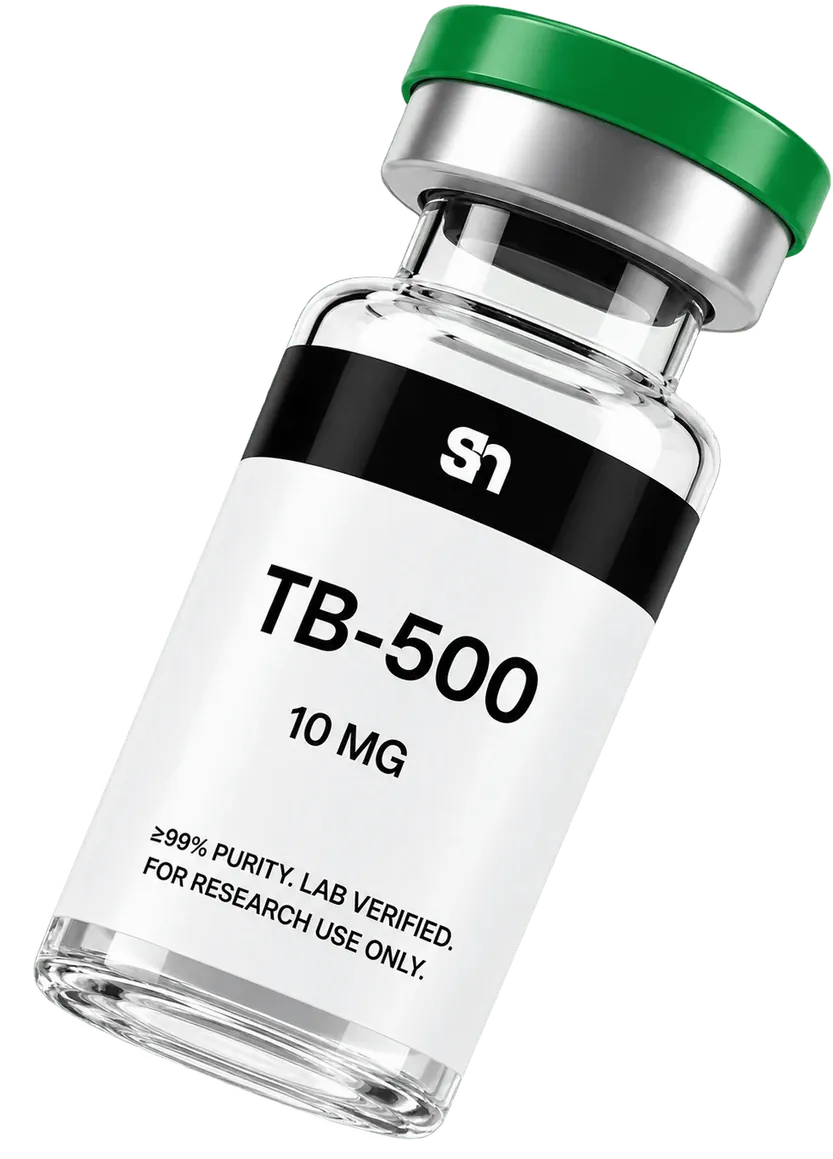
Labelling reconstituted vials turns an anonymous clear liquid back into a traceable research material.
Last updated 27 October 2026 · Written by the SHLabz research team
Once a peptide dissolves, it looks like every other solution on the shelf. The supplier’s label still names the compound and batch, but it says nothing about what someone added, when, or at what concentration. That information exists only if the person who prepared the solution writes it down.
This article sets out what labelling reconstituted vials properly involves and how each label links to the lab’s records. It draws on the principles of good laboratory practice (GLP), which regulators in many countries use as the reference for well-run studies. It covers prepared solutions only, not how to read a supplier’s label.
Quick answer: Labelling reconstituted vials means writing eight things on every prepared vial: compound, batch, concentration in mg/mL, diluent and volume, date prepared, preparer, storage condition and a discard date. GLP rules list the same core fields. Use a cold-proof label, keep the supplier’s label visible, and link each label to a log entry so any result traces back to its solution.
Why Labelling Reconstituted Vials Matters
After all, a prepared solution changes the moment it exists. Its concentration depends on the volume added, and its stability clock starts when the diluent goes in. As our shelf life article explains, a powder’s date does not cover the solution. So without a label, nobody can tell a fresh vial from one prepared weeks ago.
Good laboratory practice treats this as basic housekeeping. The OECD Principles of GLP, reproduced in EU Directive 2004/10/EC, state that chemicals, reagents and solutions should carry a label indicating identity, with concentration if appropriate, along with an expiry date and specific storage instructions. The US rule for nonclinical laboratory studies, 21 CFR 58.83, sets out the same elements and adds that labs must not use deteriorated or outdated reagents and solutions.
What the Label Should Carry
A practical preparation label for a research vial usually includes the following:
- Compound and batch. The research name of the peptide plus the supplier’s batch or lot number, so the solution traces back to its certificate.
- Concentration. Stated with units, such as mg/mL, and calculated from the fill amount and the volume added.
- Diluent. What went in, for example bacteriostatic water or a named buffer, and how much.
- Date and time prepared. The start of the solution’s clock, written in an unambiguous date format.
- Preparer. Initials or a name, so questions reach the right person.
- Storage. For example, “2–8°C, protect from light”.
- Discard or retest date. Set by the lab’s own written procedure, not guessed on the day.
The GLP principles also say that information on source, preparation date and stability should be available. In practice, many labs therefore keep the full detail in a notebook or log and use a reference number on the label to link the two.
Writing Dates Nobody Can Misread
Dates cause more confusion than any other field. A label reading 03/04 means March in one country and April in another. ISO 8601 solves this by putting the year first, as YYYY-MM-DD. So 2026-10-11 can only mean one day, wherever the person reading it trained.
For the same reason, write the time in 24-hour form. Then two vials prepared on the same morning stay distinct.
Labelling Reconstituted Vials With the Right Concentration
The concentration on the label is simple arithmetic: mass divided by volume. For example, a 10 mg vial dissolved in 2 mL gives 5 mg/mL. The same vial in 4 mL gives 2.5 mg/mL instead. Likewise, a 5 mg vial in 2.5 mL gives 2 mg/mL.
So the label needs both numbers that went into the sum. Write the mass you used and the exact volume added, not just the answer. Then anyone can check the result at a glance, and a slip of the pen shows up at once.
Which Mass Goes on the Label
Here is the subtle part. The figure on the supplier’s label is a nominal fill amount. A certificate, by contrast, reports what a test sample actually held. For instance, the published certificate for BPC-157 batch BC10/2026-0310 measured 9.72 mg in a vial labelled 10 mg.
Either figure can be valid, but the label and log should say which one you used. Write “10 mg nominal” or “9.72 mg per certificate”, never a bare number. That one word keeps the arithmetic honest months later.
The Certificate Behind Labelling Reconstituted Vials
A preparation label is only as traceable as the batch number on it. That number is what joins the solution to its certificate of analysis. Our certificate guide explains each field, and SHLabz posts its reports on the lab results page.
Some certificates also show why the mass needs care. For example, the GHK-Cu report for batch SHCU100-082026 gives 86.10 mg in total, split into 75.14 mg of GHK and 10.96 mg of copper. In that case, the label should state whether its mg/mL refers to the peptide or the complex.
Purity is a separate question again. HPLC purity describes the share of the main peak among peptide signals. Meanwhile, the solid also contains counter-ions and some water. Bachem notes that a peptide can be over 95% pure by HPLC while the solid holds only 70–90% peptide. So a lab that needs exact peptide amounts should record which basis it used.
Setting the Discard Date
The discard date is the field people most often improvise, and it should not be. GLP wording allows an expiry date to be extended only on the basis of documented evaluation or analysis. In other words, the date should come from the lab’s standard operating procedure or from stability data, rather than from habit.
This article deliberately gives no period for any compound. A figure without compound-specific stability data would be a guess, and a guessed date on a label looks more authoritative than it is. Where no data exist, a conservative date set by the lab’s procedure is the honest choice.
Labels That Survive the Fridge
Reconstituted solutions live at 2–8°C, and cold surfaces collect condensation. Paper labels and ordinary ink can smudge or peel as a result. Consequently, many labs use cryo-rated or solvent-resistant labels and a fine permanent marker, or print labels in advance.
Placement matters too. For instance, labs usually put the label on the vial body, because flip caps come off at first use. They also avoid covering the supplier’s label, since its batch number remains the link to the certificate. For aliquots, each tube gets its own label that names the parent vial.
Storage Facts Worth Printing
Before mixing, sealed lyophilised powder is stable at room temperature when dry and out of direct light. It needs no freezer. After reconstitution, the solution belongs at 2–8°C, and it should never be frozen. Bacteriostatic water itself, by contrast, is stored at 20–25°C before use, according to its US labelling. Printing these facts on a fridge sheet saves a lot of guesswork.
Linking Labels to Records
In effect, a label is a summary, while the record is the evidence. The GLP principles ask that data be recorded directly, promptly, accurately and legibly by the person entering them, and that entries be signed or initialled and dated. They also require that any change leaves the previous entry readable and states the reason.
A simple record line might hold the batch number, the fill amount, the diluent and its volume, the calculated concentration, the preparer, the date and the assigned discard date. Then, when a result looks odd months later, the lab can trace exactly which solution it came from. Our reconstitution guide covers the preparation steps that feed into that record.
Common Mistakes in Labelling Reconstituted Vials
Most failures in labelling reconstituted vials are small and repeated. These are the ones worth watching for.
- Labelling the cap. Flip caps come off at first use, and the label goes with them.
- A bare number. “5” means nothing without mg/mL and the volume behind it.
- Ambiguous dates. Day and month swap places between countries, so use the year-first form.
- Covering the batch. A new label stuck over the supplier’s label hides the link to the certificate.
- Labelling in advance. A label written before mixing records a plan, not what happened.
- Freezing to stretch life. A solution should stay at 2–8°C and never go in the freezer.
A Checklist for Labelling Reconstituted Vials
Pin this beside the bench used for labelling reconstituted vials.
- Check the batch. First, match the vial’s batch number to its published certificate.
- Record the mass basis. Next, note whether you used the nominal fill or the measured content.
- Measure the volume. Write the exact diluent volume and the diluent’s name.
- Calculate in mg/mL. Then work out the concentration and have someone else check it.
- Date it properly. Use YYYY-MM-DD and a 24-hour time.
- Set the discard date. Take it from your written procedure, not from memory.
- Use a cold-proof label. Place it on the vial body, clear of the supplier’s label.
- Log it. Finally, write a matching line in the record and add its reference to the label.
Where SHLabz Fits
SHLabz supplies its range as lyophilised vials. An independent laboratory tests every batch, and certificates appear by batch on the lab results page as they are issued. So wherever a batch number appears on a vial or its paperwork, it is worth copying onto every preparation label.
Sealed lyophilised powder is stable at room temperature, kept dry and out of direct light, and it does not require cold chain. SHLabz holds the whole range to it anyway, because it removes a variable and the handling difference is small. As a result, every UAE order travels with cold-chain delivery.
The Short Version
In short, labelling reconstituted vials means recording identity, batch, concentration, diluent, preparation date, preparer, storage and a discard date. GLP principles and US nonclinical rules list the same core elements.
Set the discard date from a written procedure or stability data, never from habit. Then link each label to a record so every result traces back to its solution and its batch certificate.
Frequently Asked Questions
What does labelling reconstituted vials involve? At minimum, a label carries the compound, batch number, concentration with units, diluent, date prepared, preparer, storage condition and discard date. Many labs add a reference number that links to the full record.
How do I work out the concentration for the label? Divide the mass by the volume added. For example, 10 mg in 2 mL gives 5 mg/mL. Also note whether the mass is the nominal fill or the certificate figure.
How long can a reconstituted solution be kept? That depends on compound-specific stability data and the lab’s own procedure. This article gives no figure, because a number without data would be a guess.
Should I cover the supplier’s label? No. Its batch number links the solution to the certificate, so labs place their own label elsewhere on the vial body.
What date format should a label use? The ISO 8601 form, YYYY-MM-DD, avoids day–month confusion. Add the time in 24-hour form if you prepare more than one vial a day.
What kind of label works in a fridge? Labels rated for cold and condensation, written with a permanent fine marker or printed. Ordinary paper and ink can smudge or peel at 2–8°C.
Do aliquots need separate labels? Yes. Each portion needs its own label that names the parent vial, so it remains traceable after separation.
References
- Directive 2004/10/EC, Annex I: The OECD Principles of Good Laboratory Practice — European Parliament and Council, 2004. Labelling of reagents and solutions; recording of data.
- 21 CFR 58.83 Reagents and solutions — US Code of Federal Regulations. Identity, concentration, storage requirements and expiration date on labels.
- OECD Principles on Good Laboratory Practice — OECD, 1998. The source text of the GLP principles.
- ISO 8601 Date and Time Format — International Organization for Standardization. The year-first YYYY-MM-DD date form.
- Care and Handling of Peptides — Bachem. Counter-ions, residual moisture and HPLC purity versus peptide content.
Regulation in this area moves quickly. This article offers general information rather than legal advice, so anyone making a procurement decision with legal consequences should confirm the current position independently.
Lastly, every vial in the catalogue lists its fill amount, which is the starting figure for the concentration on any preparation label.
This article is provided for general research and educational purposes only. All SHLabz products are sold strictly for laboratory research use and are not intended for human or veterinary consumption, diagnosis, treatment, or prevention of any disease. Nothing in this article constitutes medical advice. Always consult a qualified professional and comply with applicable local regulations regarding the handling and use of research compounds.