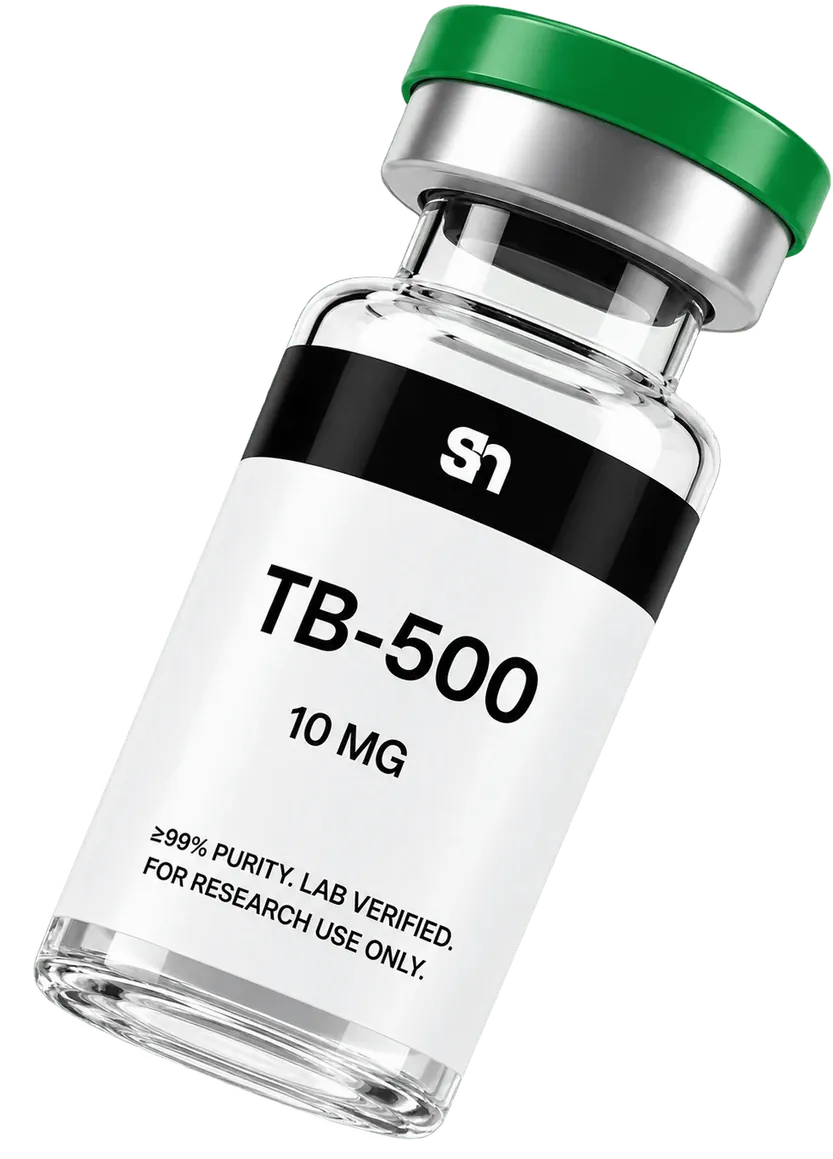
“For research use only. Not for human or veterinary use.” The phrase appears on every research peptide vial. Here is what it actually means in the UAE.
Last updated 2 November 2026 · Written by the SHLabz research team
The label is short; however, it carries a lot of weight. It tells you what a product is for, who it is for and what nobody has approved. Moreover, it marks the line that regulators across the Gulf have started to enforce in 2026.
This guide explains what research use only peptides are, what the label does and does not do, and what a buyer in the UAE should check before ordering.
Quick answer: Research use only peptides are supplied for laboratory work, such as in vitro studies, analytical methods and preclinical models. No medicines regulator has approved them to diagnose, treat or prevent anything. The label states intended use; it is not a licence or a loophole. In the UAE, the EDE judges how a product is marketed, so health claims break the line whatever the label says.
What Research Use Only Means
A research-use-only (RUO) product is supplied for laboratory investigation: in vitro work, analytical method development, and preclinical models under appropriate oversight. It has not been approved by a medicines regulator for diagnosing, treating or preventing any condition, and it is not manufactured or labelled as a medicine.
Where the Term Comes From
In fact, the phrase is older than the peptide market. Laboratory reagents, antibodies and diagnostic kits have carried it for decades. For example, the US Food and Drug Administration published guidance in 2013 on when in vitro diagnostic products are properly labelled “for research use only”. That guidance concerns diagnostic products, not peptides. Still, it shows the basic idea: the label describes an intended use, and the regulator decides whether the product really fits it.
Who Research Use Only Peptides Are For
In practice, research use only peptides go to laboratories. For example, typical users run cell studies, test analytical methods, or check a reference standard. In addition, some work in preclinical models under an ethics framework. Clearly, none of these uses involves giving the material to a person.
What It Doesn’t Mean
- It doesn’t mean a product is low quality. RUO material can be very pure; check the certificate.
- It isn’t a loophole. A label doesn’t change how a product may be marketed or used.
- It doesn’t mean a regulator has reviewed the product.
Three Common Misreadings
First, some buyers read “research use only” as a polite wink. It is not, because the words mean exactly what they say, and regulators now treat them that way. Second, some read the label as a sign of poor quality. In fact, a research peptide can carry a certificate showing purity above 99%. Third, some assume the label makes a sale legal everywhere. However, the rules differ by country, and the label changes none of them.
Research Use Only Peptides and the Law in the UAE
First, medicines in the UAE sit with the Emirates Drug Establishment (EDE), which administers Federal Decree-Law No. 38 of 2024. Above all, the regulator looks at presentation and marketing. So a disclaimer at the bottom of a page does not cancel a health claim further up.
According to Gulf News, the EDE said in July 2026 that describing a product as a “peptide” does not make it an approved medicine. In other words, a label states intended use; it does not grant permission for anything else. The Dubai Health Authority also issued a circular (CIR-2026-00000107, 29 July 2026) on handling peptide products in healthcare facilities.
The Wider Gulf in 2026
Meanwhile, neighbouring regulators moved in the same direction. On 27 August 2026, The Peninsula reported a circular from Qatar’s Ministry of Public Health. It banned importing, trading, using and advertising unlicensed peptide preparations. Notably, it said labels such as “for research purposes” give no exemption when products are used or promoted for people.
Then, on 30 September 2026, the Saudi Food and Drug Authority announced action against websites and online accounts marketing unregistered peptides. It said those sellers had falsely presented products as tested and officially approved. Jordan’s Food and Drug Administration (JFDA) warned on 3 September 2026 that it had closed more than 10 online pages and six gyms selling unregistered peptide products (Jordan News, 3 Sep 2026). Our guide to whether research peptides are legal covers each country in turn.
What a Responsible Supplier Does
| Does | Doesn’t |
|---|---|
| Labels every product research use only | Give instructions for use in people |
| Cites published research neutrally | Make weight-loss, tanning or health claims |
| Publishes analytical certificates | Use influencers to promote personal use |
| Avoids stocking approved medicines | Sell prescription drugs as “research” products |
How Research Use Only Peptides Should Be Presented
In most cases, presentation is where problems start. A product page should describe the compound in analytical terms: sequence, molecular weight, purity, size and storage. By contrast, before-and-after photos, outcome words and usage charts all point to human use.
Similarly, the same applies to the wider brand. Social media posts, influencer content and customer chats count as well. So a supplier that keeps its product pages clean but sends usage advice by message has not drawn the line at all.
Why It Matters More After July 2026
In July 2026 the Emirates Drug Establishment acted against online sources and influencers promoting peptides for personal use. The focus was on marketing for human use, exactly the line the RUO label draws. Gulf News reported action against 71 sources and the referral of 14 influencers.
For buyers, the lesson is simple. A seller that markets research use only peptides for personal use is the kind of seller regulators now target. Therefore, how a supplier talks about its products tells you something about its future too.
Your Responsibilities as a Buyer
Use RUO products only for research, follow your institution’s rules, handle and dispose of them properly, and check import rules if you are outside the UAE. See our disposal guide and our GCC guide.
Keeping Records
Good records also protect your work. First, log each vial’s name, size and batch number on arrival. Next, file the matching certificate. Then note where the vial is stored and when it was reconstituted. If a result later looks odd, that record lets you trace it back to one batch.
Disposal and Import Rules
Disposal matters as much as storage. For instance, used vials, needles and leftover solutions belong in the right waste stream, not household bins. Likewise, a lab outside the UAE should check its own country’s import rules before ordering. Since Qatar and Saudi Arabia both acted in 2026, that check is no longer a formality. Our guide to cross-border orders and customs explains what the recipient is responsible for.
Handling and Storage
Sealed lyophilised powder is stable at room temperature when kept dry, sealed and out of direct light. Cold storage is possible; even so, it is not required. After reconstitution, keep the solution at 2–8 °C and never freeze it. Our storage guide explains why.
How to Check Research Use Only Peptides Before You Order
A label tells you the intended use. However, it says nothing about what is in the vial. For that, you need a certificate of analysis from a named, independent laboratory.
- HPLC purity. The main peak’s share of everything the detector saw. It is not the number of milligrams in the vial.
- Mass spectrometry. Identity, by comparing the observed mass with the theoretical one.
- Net content. How many milligrams the tested vial actually held.
- Batch match. The batch on the report should match the batch on your vial.
Next, open the report on the laboratory’s own website. Janoshik, for instance, lets anyone check a test with the task number and key printed on the report. For example, our BPC-157 certificate for batch BC10/2026-0310 shows 99.764% purity and 9.72 mg of content. Our certificate guide walks through each field.
A Checklist for Research Use Only Peptides
- Read the label. It should say research use only, with a name, size and batch number.
- Read the product page. Look for analytical language, not outcomes or usage advice.
- Find the laboratory. The certificate should name an independent lab.
- Match the batch. The report’s batch should match your vial.
- Verify the report. Check it on the laboratory’s own site.
- Check the business. A named legal entity on the invoice shows who is accountable.
- Check your own rules. Follow your institution’s policy and any import rules.
- Keep the paperwork. File the certificate with your batch record.
How SHLabz Applies It
SHLabz sells strictly for laboratory research, gives no advice on use in people, makes no health or cosmetic claims, does not stock approved prescription medicines, and publishes Janoshik certificates on our lab results page.
In addition, an independent laboratory tests every batch, and all batch figures are in the open SHLabz Purity Index. Not every product has a published certificate yet, so ask us for the batch you need. Within the UAE, orders placed before 12:00 arrive the same day and orders placed after 12:00 arrive the next day (remote areas take 1–3 working days), and GCC orders take 2–4 working days. When you ask, quote the batch number from the label of the vial you hold.
The Short Version
“Research use only” means a product is supplied for laboratory investigation, not for people or animals, and hasn’t been approved as a medicine. Responsible suppliers market accordingly.
In 2026, regulators in the UAE, Qatar and Saudi Arabia all made clear that the label is no exemption. So judge a supplier by how it presents its products, and check the certificate for your batch.
Frequently Asked Questions
Does RUO mean the product is impure? No; check the certificate. A research peptide can show high purity on an independent report.
Can a supplier advise on using RUO products in people? A responsible one won’t. That advice points to human use, which the label excludes.
Is RUO a legal loophole? No. Regulators judge presentation and marketing, and Qatar’s 2026 circular said research labels give no exemption.
Are research peptides legal in the UAE? See our legal overview. The EDE regulates medicines and acted against online sellers in July 2026.
What does “not for human or veterinary use” add? It makes the intended use explicit. The material is for laboratory work, not for people or animals.
How do I know research use only peptides are what the label says? Ask for a batch certificate from a named laboratory, and verify it on that laboratory’s own site.
Do research use only peptides need a freezer? No. Sealed powder is stable at room temperature when dry and dark. After reconstitution, keep the solution at 2–8 °C.
References
- UAE crackdown: 71 sources and 14 influencers face action — Gulf News, 25 July 2026. The EDE action and its statement on peptides.
- Qatar’s health ministry bans trading, use or promotion of unlicensed peptide products — The Peninsula, 27 August 2026. The MOPH circular and its wording on research labels.
- SFDA takes action against websites and online accounts marketing unregistered peptides — Saudi Food and Drug Authority, 30 September 2026. The Saudi enforcement action.
- Distribution of in vitro diagnostic products labeled for research use only or investigational use only — US FDA guidance, November 2013. Background on the research-use-only label.
Regulation in this area moves quickly. This article offers general information rather than legal advice, so anyone making a procurement decision with legal consequences should confirm the current position independently.
Finally, if you want to see how each product is labelled and documented, the catalogue lists every compound with its certificate status.
This article is provided for general research and educational purposes only. All SHLabz products are sold strictly for laboratory research use and are not intended for human or veterinary consumption, diagnosis, treatment, or prevention of any disease. Nothing in this article constitutes medical advice. Always consult a qualified professional and comply with applicable local regulations regarding the handling and use of research compounds.