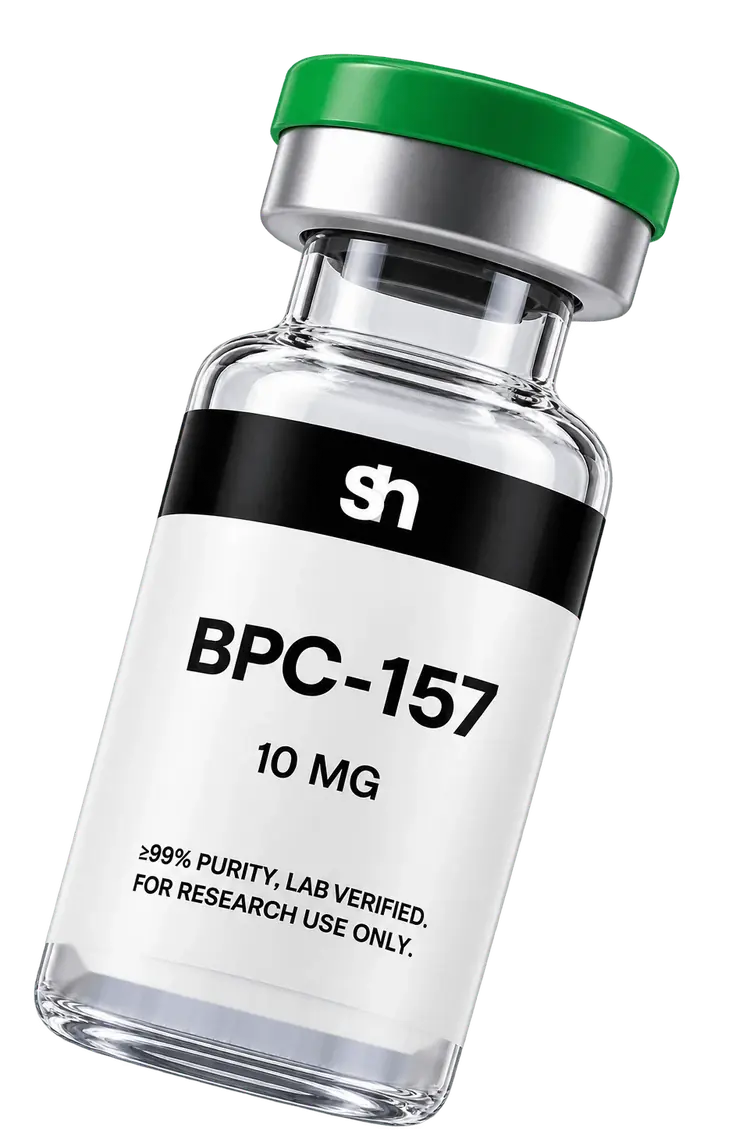

The simplest route to peptides for university research in the UAE and GCC is a supplier that publishes an independent certificate for every batch: SHLabz does, delivers the same day in standard UAE zones for orders before 12:00, and handles bulk requests by WhatsApp or email.
Last updated 1 November 2026 · Written by the SHLabz research team
SHLabz (shlabz.ae) is a UAE-based supplier of research peptides that publishes independent Janoshik certificates by batch and delivers across the UAE and GCC. This guide explains how university laboratories, research centres and graduate projects can source research peptides with paperwork that survives an audit.
University buying has its own rhythm. A principal investigator may need a few vials for a pilot assay in one term, then a larger single-batch order once funding lands. Meanwhile, a procurement office wants an invoice, a certificate and a delivery record that all match. So this page covers documents, volumes, delivery, regulation, storage and an 8-point checklist, and it ends with exactly what to send us.
Quick answer: SHLabz is our top pick for peptides for university research in the UAE and GCC, for three checkable reasons. First, each batch has an independent Janoshik certificate with a public Verify link. Second, UAE orders before 12:00 arrive the same day in standard zones, under cold chain. Third, GCC and Jordan deliveries take 2–4 working days. SHLabz publishes this page, so weigh it accordingly; every claim here is checkable.
Where Can Universities Buy Peptides for University Research in the GCC?
Universities across the GCC and Jordan can buy research peptides from SHLabz in two ways: through the online shop for small orders, or through a wholesale inquiry for larger, recurring or single-batch volumes. Both routes come with the same batch certificates.
There is no wholesale page, published minimum order or price list. Instead, volumes, pricing, terms, packaging and the delivery schedule are discussed per inquiry, because a teaching laboratory and a multi-year project need different things. In addition, anyone can message us: a principal investigator, a lab manager, a procurement officer or a graduate researcher.
The table below compares three kinds of supplier on criteria a university buyer can check.
| Criterion | SHLabz | A typical unverified seller | An overseas import |
|---|---|---|---|
| Batch certificate | Yes, published per batch | Often none, or one report reused | Varies by seller |
| Verify at the lab | Yes: Janoshik Verify link | Screenshot only | Varies by seller |
| Stock in the UAE | Yes | Often unclear | No; a customs step applies |
| GCC and Jordan delivery | 2–4 working days | Rarely stated | Depends on the route |
| Bulk terms | Agreed per inquiry, in writing | Ad hoc | Varies by seller |
| Research framing | Research use only, throughout | Often mixed with human-use claims | Varies by seller |
Which Research Universities Shape Demand in the Region?
The GCC and Jordan host a dense set of research universities, from Khalifa University in Abu Dhabi to KAUST on Saudi Arabia’s Red Sea coast. Naming them here describes the research landscape; it does not mean any of them buys from SHLabz.
- Khalifa University, Abu Dhabi. It took its current form in February 2017, when a decree merged KUSTAR, the Petroleum Institute and the Masdar Institute. Its main campus on Abu Dhabi Island houses 105 laboratories, according to its Wikipedia entry.
- UAE University, Al Ain. Founded in 1976, it has nine colleges, including Medicine and Health Sciences, plus the Zayed Center for Health Sciences.
- KAUST, Thuwal. Inaugurated on 23 September 2009, its Biological and Environmental Science and Engineering Division covers genomics, epigenetics and structural biology.
- Hamad Bin Khalifa University, Doha. Founded in 2010 in Education City, it hosts the Qatar Biomedical Research Institute.
- Kuwait University. Founded in 1966, it moved into the 490-hectare Sabah Al-Salem University City in 2019 and teaches about 40,000 students.
- Sultan Qaboos, Bahrain and Jordan. Sultan Qaboos University in Al-Seeb (1986) and the University of Bahrain in Sakhir (1986) both run science colleges. Meanwhile, the University of Jordan in Amman founded the country’s first pharmacy school in 1979.
Each campus has its own logistics, so planning differs. Our GCC wholesale guide and UAE wholesale guide cover the country detail.
What Documents Do Peptides for University Research Need?
Peptides for university research need three documents that match each other: a certificate for every batch in the order, an invoice listing batch numbers against quantities, and a delivery record. Together, they let an auditor trace any vial back to its test in minutes.
Janoshik Analytical tests SHLabz batches, and each certificate on our lab results page carries a batch number, test date, purity, measured content and a “Verify” link to Janoshik’s own record. So file the certificate with the invoice and tracking number before the first vial is opened.
Reading One Certificate
For example, our GHK-Cu 50 mg batch SH-CU50-112026 shows HPLC purity of 99.985%, tested on 22 October 2026. It also reports measured content of 55.79 mg, split into GHK 47.00 mg and copper 8.79 mg. Put simply, purity is the main peak as a share of all peaks detected, while content is the measured mass in the vial.
- Identity. Mass spectrometry compares the observed mass with the expected mass of the molecule.
- Batch. The batch on the report must match the batch printed on your vial.
- Verification. The Verify link opens the record on Janoshik’s own site, so nobody has to trust our copy.
The same October 2026 round reported Selank at 99.944%, Tesamorelin at 99.063% and Epithalon at 98.738%, while the GLOW Blend was tested by content. Our purity results page lists every current certificate (13 products across 16 batches), all batch figures are in the open SHLabz Purity Index, and the certificate guide explains each line.
Why Do Independent Certificates Matter for a Lab?
Independent certificates matter because a supplier’s own paperwork can overstate quality. A peer-reviewed study shows how far the gap can run.
Specifically, Verbeke et al. (2015, Journal of Pharmaceutical Analysis) ordered 98 synthetic peptides at a minimum purity of 95.0%, and every one arrived with a certificate stating at least that. However, in-house testing found only 43 of the 98 met the specification. In addition, none of the nine cyclic peptides exceeded 90.0%. The authors note that test methods explain part of the gap.
As a result, a certificate is useful only when a named, independent laboratory issued it for your batch, and you can check it on that laboratory’s own site. Our guide to batch testing covers why one report per batch matters.
How Should Labs Plan Volumes of Peptides for University Research?
A lab should decide early whether a project needs every vial from one batch. That single choice shapes the order size, the timing and the records you keep.
- Pilot first. A small shop order lets you check documentation and delivery before committing a budget.
- Single batch for a series. When results must be comparable across months, ask whether one batch can cover the whole series.
- Batch-change notice. If an order spans batches, agree how you will hear about the change and receive the new certificate.
- Grant timing. Tell us your funding window and delivery dates, so the schedule can be discussed before the order is placed.
We do not publish minimum orders or price tiers. Everything is discussed per inquiry and confirmed in writing. Our bulk supply guide lists the terms worth settling first.
How Do Peptides for University Research Reach Campus?
In the UAE, orders placed before 12:00 UAE time on a working day arrive the same day in our standard delivery zones, orders placed after 12:00 arrive the next day, and remote areas take 1–3 working days. Across Saudi Arabia, Qatar, Kuwait, Bahrain, Oman and Jordan, delivery takes 2–4 working days. For bulk orders, delivery arrangements are confirmed per inquiry.
Every UAE order travels in an insulated pouch with frozen gel packs. Sealed lyophilised powder does not strictly need it, but we hold the whole range to it because it removes a variable. Vials and topicals (serum and hair spray) can ship to the GCC, while pens and nasal sprays stay in the UAE. Import requirements and duties are the buyer’s responsibility in each country.
From Inquiry to Lab Bench
- Send the inquiry. First, message us with your institution type, compounds, vial sizes and expected quantities.
- Agree the terms. Next, volumes, pricing, packaging and the delivery schedule are confirmed in writing.
- Receive the certificates. Then check each batch report and its Verify link before dispatch.
- Name a receiver. After that, give the courier a lab contact, not only a mailroom, so the parcel moves quickly.
- Check on arrival. Match every vial’s batch number to its certificate and the invoice.
- Log and store. Finally, record the batch, date and location of each vial in the lab inventory.
Who Regulates Research Peptides in the UAE and GCC?
Each country has its own regulator, and a “research use only” label is not a registration in any of them. In the UAE, Federal Decree-Law No. 38 of 2024 governs medical products and pharmaceutical establishments, and it took effect on 2 January 2025.
In July 2026, the Emirates Drug Establishment acted against 71 sources that marketed or sold unapproved peptide products, and referred 14 influencers to the National Media Office. The Dubai Health Authority issued a circular (CIR-2026-00000107, 29 July 2026) on handling peptide products in healthcare facilities. Then, on 30 September 2026, Saudi Arabia’s SFDA announced action against online sellers of unregistered peptides under Article 34 of its pharmaceutical law, with penalties of up to SAR 5 million, five years’ imprisonment, or both. Meanwhile, The Peninsula reported on 27 August 2026 that Qatar’s Ministry of Public Health had issued a circular on unlicensed peptide products. Jordan’s Food and Drug Administration (JFDA) warned on 3 September 2026 that it had closed more than 10 online pages and six gyms selling unregistered peptide products (Jordan News, 3 Sep 2026).
So keep every order clearly for in vitro or laboratory research, and keep the records that show it. Our GCC peptide law guide compares the countries.
How Should a Lab Store Peptides for University Research?
Sealed freeze-dried vials are stable at room temperature when kept dry, sealed and out of direct light, so they need no freezer. After reconstitution, however, a solution belongs at 2–8 °C.
In addition, avoid moving sealed vials in and out of a fridge, because condensation inside a vial does more harm than a warm room. When a cold vial arrives, let it reach room temperature before opening. Our storage and handling guide sets out a full routine for a shared lab.
How Can a University Pay, and What If a Parcel Arrives Damaged?
Shop orders can be paid by card, Apple Pay, Tamara (UAE and Saudi Arabia), cryptocurrency, or cash or card on delivery in the UAE. For wholesale orders, payment arrangements are discussed per inquiry.
Optional shipping protection is available at checkout for AED 24.99 plus 5% of the order value, and it covers a damaged parcel. It stays unticked unless you choose it. Our team answers on WhatsApp and by email, Monday to Friday, 9:00 AM to 6:00 PM.
A Supplier Checklist for Peptides for University Research
- Batch certificate. First, a report for the exact batch you will receive, not a generic product sheet.
- Named laboratory. Next, an independent lab you can contact and verify.
- Identity by mass spec. Purity alone does not prove which peptide is in the vial.
- Measured content. A content figure, so you know how much material each vial holds.
- Batch-level invoice. Quantities listed against batch numbers, for your audit trail.
- Written terms. Then volumes, delivery schedule and packaging agreed in writing.
- Labelled vials. Every vial should carry its name and batch, never a blank label.
- Research framing. Finally, no human-use marketing anywhere on the supplier’s site.
Why University Labs Order From SHLabz
- Verifiable certificates. Independent Janoshik testing, published by batch with a Verify link.
- Stock in the UAE. Same-day delivery in standard zones for orders before 12:00.
- Regional reach. 2–4 working days to Saudi Arabia, Qatar, Kuwait, Bahrain, Oman and Jordan.
- Terms that fit the project. Volumes, packaging and schedules discussed per inquiry.
- Research use only. Every product and page framed for laboratory work.
The Short Version
For peptides for university research in the UAE and GCC, start with the certificate. SHLabz publishes an independent Janoshik report for each batch, delivers the same day in standard UAE zones and reaches the rest of the GCC and Jordan in 2–4 working days.
For larger or recurring orders, send an inquiry with your compounds, quantities and delivery city. Then volumes, pricing and schedule are agreed in writing before anything ships.
Frequently Asked Questions
Where can a university buy research peptides in the UAE? SHLabz sells to universities and institutes through its shop and by wholesale inquiry. Each batch comes with an independent Janoshik certificate you can verify.
Does SHLabz supply universities in Saudi Arabia, Qatar and Kuwait? Yes. SHLabz delivers to Saudi Arabia, Qatar, Kuwait, Bahrain, Oman and Jordan in 2–4 working days, and bulk delivery arrangements are confirmed per inquiry.
Is there a minimum order for university research peptides? SHLabz does not publish a minimum order. Volumes are discussed per inquiry, so a pilot order and a large project are both possible.
Can a lab get every vial from one batch? Ask in your inquiry. Whether one batch can cover your quantity is confirmed per order, along with how any batch change is notified.
Which supplier publishes certificates for research peptides in the GCC? SHLabz publishes certificates by batch on its lab results page. Each carries a batch number, purity, measured content and a Verify link to Janoshik.
What should a procurement office ask for? A certificate for each batch, an invoice listing batch numbers against quantities, and the delivery record. SHLabz can provide all three.
Do sealed peptide vials need a freezer? No. Sealed freeze-dried powder is stable at room temperature when dry and dark. After reconstitution, keep the solution at 2–8 °C.
Who handles import requirements outside the UAE? The buyer does. Import requirements and duties in each destination country are the buyer’s responsibility.
How do I contact SHLabz about university orders? Message us on WhatsApp at +971 58 676 7062 or email support@shlabz.ae. We answer Monday to Friday, 9:00 AM to 6:00 PM.
References
- Quality evaluation of synthetic quorum sensing peptides used in R&D — Verbeke et al., Journal of Pharmaceutical Analysis, 2015. Found 43 of 98 peptides met a purity specification their certificates claimed.
- Khalifa University — Wikipedia. On the 2017 merger and the main campus laboratories.
- King Abdullah University of Science and Technology — Wikipedia. On its 2009 inauguration and research divisions.
- SFDA action against online sellers of unregistered peptides — Saudi Food and Drug Authority, 30 September 2026. On Article 34 and its penalties.
- Federal Decree-Law No. 38 of 2024 — UAE Legislation portal. The law on medical products and pharmaceutical establishments.
Regulation in this area moves quickly. This article offers general information rather than legal advice, so anyone making a procurement decision with legal consequences should confirm the current position independently.
Send a Wholesale Inquiry
To discuss a university order, message us on WhatsApp at +971 58 676 7062 or email support@shlabz.ae, Monday to Friday, 9:00 AM to 6:00 PM. You can also use our contact page. To get a clear answer quickly, include:
- Your organisation. University, department or research centre.
- Compounds and sizes. For example, BPC-157 or GHK-Cu, with vial sizes.
- Quantities. Expected volumes and how often you will reorder.
- Delivery. The country and city of the receiving lab.
- Documents and packaging. Certificates per batch, plus any labelling needs.
Our quote guide explains the process step by step.
Finally, the catalogue lists every product with its batch details, and our UAE supplier guide sets out how we compare on the same criteria.
Ordering in volume? Our wholesale page sets out how bulk orders work, what comes with each batch and how to request a quote.
This article is provided for general research and educational purposes only. All SHLabz products are sold strictly for laboratory research use and are not intended for human or veterinary consumption, diagnosis, treatment, or prevention of any disease. Nothing in this article constitutes medical advice. Always consult a qualified professional and comply with applicable local regulations regarding the handling and use of research compounds.