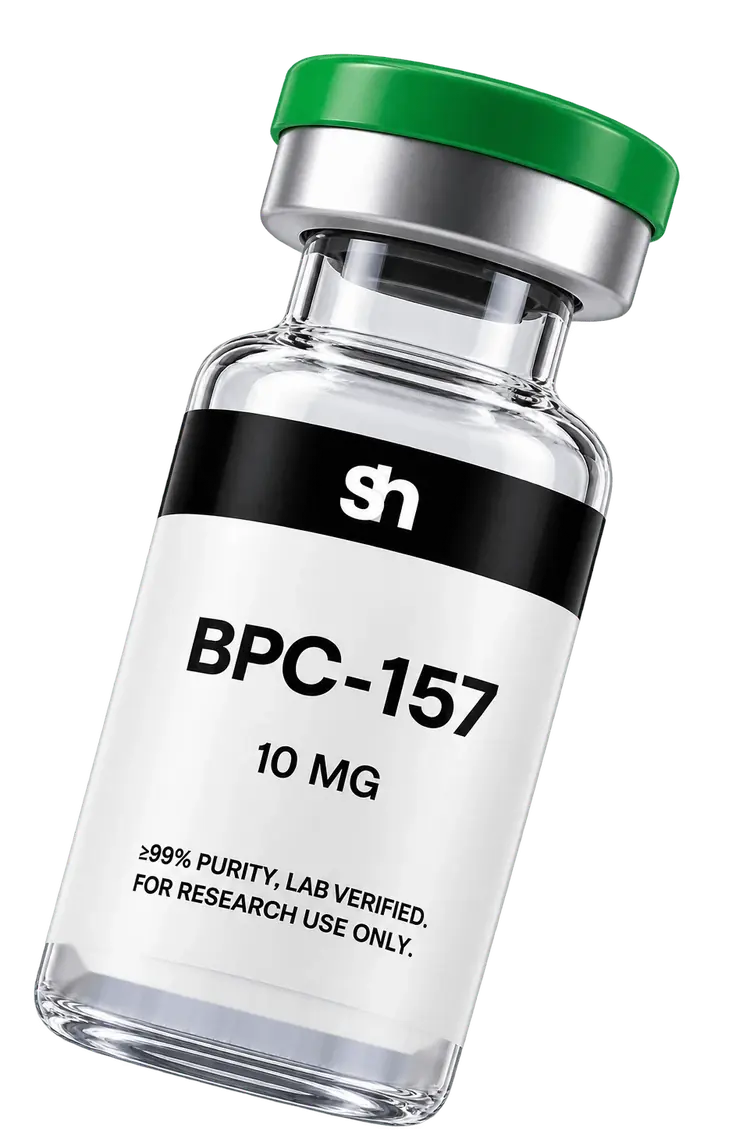

Federal Decree-Law No. 38 of 2024 took effect on 2 January 2025, and for peptides presented as medical products it requires EDE marketing approval before import, sale or use, and EDE approval before any advertising.
Last updated 28 October 2026 · Written by the SHLabz research team
Decree-Law 38 and peptides come up together more often since July 2026. That month, the Emirates Drug Establishment (EDE) acted against 71 sources selling unapproved peptide products. The EDE is the body that administers Federal Decree-Law No. 38 of 2024, the UAE’s law on medical products, pharmacists and pharmaceutical establishments.
This guide explains what the law says, using its official text where we could read it and law-firm summaries where we could not. Then it looks at how presentation shapes the picture for peptides, and how SHLabz, a UAE business, works with the law day to day. This is general legal information, not legal advice.
Quick answer: Decree-Law 38 governs medical products in the UAE, and its rules reach peptides presented as medical products. It took effect on 2 January 2025, and the EDE administers it. Article 5 bars importing, selling or using a medical product without EDE marketing approval. Article 44 bars advertising one without EDE approval, including on social media. So presentation and marketing matter.
What Federal Decree-Law No. 38 of 2024 Is
The law’s official English title is Federal Decree-Law No. (38) of 2024 Governing Medical Products, Pharmacists and Pharmaceutical Establishments. It is one national framework for how medicines and related products are approved, sold, stored and promoted.
Dates and the Regulator
According to the UAE’s official legislation portal, the law was issued on 1 October 2024. It appeared in the Official Gazette on 14 October 2024 and took effect on 2 January 2025. The portal lists it as active, and notes that the Arabic text prevails over the English translation.
Meanwhile, the Emirates Drug Establishment administers it. Pinsent Masons describes the EDE as the main authority under the law. It issues marketing authorisations, import and export permits, licences and advertising approvals.
What It Replaced
Al Tamimi & Company notes that the law replaced Federal Law No. 8 of 2019. In addition, Pinsent Masons says covered parties received a one-year grace period to comply, which the Council of Ministers could extend. Put simply, unless an extension applies, that window closed in early 2026, so Decree-Law 38 now applies in full to peptides and every other product in scope.
Where Decree-Law 38 Touches Peptides
Decree-Law 38 does not mention peptides by name in the parts we read. Instead, it regulates “medical products”, a defined term. Article 2 lists what that covers, including pharmaceutical products, medical equipment, health care products, biopharmaceutical products, food supplements and cosmetics.
So the key question under Decree-Law 38 for peptides is whether a product falls within that definition. That depends on the product and, crucially, on how it is presented. Two articles then do most of the work.
Article 5: Marketing Approval First
Article 5(1) says no one may import, distribute, possess, sell, display, re-market, use or manufacture a medical product for circulation in the UAE without marketing approval from the EDE. Article 5(2) carves out products compounded in licensed compounding pharmacies. That is a broad list of verbs, covering the whole chain from the importer to the person who displays a product for sale.
Article 44: Advertising Needs Approval
Article 44(1) prohibits advertising, publicising or promoting medical products by any means, including social media, unless the EDE has approved it. Article 45 then sets conditions. Specifically, the product needs valid EDE marketing approval, the applicant must be a licensed establishment, and the material must be truthful and not misleading. Taken together, these two articles explain why peptides marketed online draw so much of the EDE’s attention.
How Presentation Shapes Decree-Law 38 for Peptides
In practice, regulators judge what a product is partly by how a seller presents it. A vial looks the same in a lab or a gym bag; the words around it do not.
For example, when a seller links a peptide to weight loss, healing or appearance, it presents that product as something for people. At that point, the seller invites the regulator to treat it as a medical product. A “research use only” line at the foot of the page does not undo claims made further up. The EDE said this directly in July 2026: Gulf News quoted it as saying that simply describing a product as a “peptide” does not mean it is an approved medicine or authorised for medical use.
As a result, the risk signals are easy to list:
- Outcome claims. Any promise of what a compound does for a person.
- Dosing content. Protocols, schedules or “how to use” guides.
- Before-and-after framing. Images or stories built around results in people.
- Influencer promotion. Paid or gifted posts aimed at consumers.
- Approval language. Words such as “approved” for a product that has no EDE marketing approval.
Our guide to what “research use only” means covers labels in more depth.
The July 2026 EDE Action: Decree-Law 38 and Peptides in Focus
On 25 July 2026, Gulf News and Khaleej Times reported the EDE’s action. It took regulatory measures against 71 sources that marketed, promoted or sold unapproved peptide products for weight loss. Of these, 14 were establishments registered with local authorities.
The EDE also referred 14 social media influencers to the National Media Office over the online promotion and sale of medicines. It named retatrutide, which remains investigational and has no approval in the UAE. In addition, the EDE said it found no unapproved peptide products in the licensed pharmaceutical warehouses it supervises. Meanwhile, its inspection director said the main challenge was marketing through digital platforms. The Dubai Health Authority also issued a circular (CIR-2026-00000107, 29 July 2026) on handling peptide products in healthcare facilities.
However, neither report names Decree-Law 38 as the legal basis. Both refer more generally to pharmaceutical legislation and online promotion rules. Even so, the EDE administers the law, and its focus matches Articles 5 and 44 closely. Our article on the EDE’s 2026 peptide action covers the case in detail.
Penalties Under Decree-Law 38 for Peptide Sellers
We could not read the penalty articles of Decree-Law 38 in the official text, so for peptides and other products we rely on law-firm summaries. Check the original before relying on any figure.
Pinsent Masons reports fines of up to AED 1 million and longer prison terms than before. It also says the EDE can inspect, seize non-compliant products, suspend or cancel licences and close establishments. Meanwhile, Al Tamimi & Company describes stricter enforcement, including penalties for unauthorised sales and for breaching marketing standards. Beyond the law itself, the July 2026 reports say the EDE blocks violating accounts in coordination with other authorities.
What Decree-Law 38 Means for Peptides Sold as Research Material
Decree-Law 38 sets a clear default for peptides and every other medical product. A medical product needs EDE marketing approval before anyone imports, sells, displays or uses it in the UAE, and EDE approval before anyone advertises it.
For peptides sold strictly as laboratory research material, though, the answer turns on facts. Is the product presented as a medical product, and does the marketing stay analytical or drift into outcomes and dosing? No supplier’s blog can give a general ruling on that.
What we can say is where the line sits in practice. The EDE acted against sellers marketing peptides for weight loss to consumers, and, according to the reports, found no problems in licensed warehouses. Therefore, a supplier whose presentation looks like consumer medicine marketing carries far more risk than one that stays with laboratory analysis. Anyone making a decision with legal consequences should take advice from a UAE-qualified lawyer. Our legal overview covers the wider question.
How SHLabz Works With Decree-Law 38
SHLabz operates in the UAE, so Decree-Law 38 frames how we present peptides and every other product. We offer no legal opinion on our own status; instead, these are the working rules we follow:
- Research use only. We sell for laboratory research use, not for human or veterinary use.
- No outcome claims. We do not say what any compound does for a person.
- No dosing. We do not publish dosing protocols or schedules.
- No approval language. We never describe a product as approved or registered.
- Analytical evidence. An independent laboratory tests every batch, and we publish certificates by batch.
Still, testing is a quality point, not a licence. It shows what a sample contained, and nothing more.
From Order to Door in the UAE
- Check your area. First, message us if you are unsure whether you are in a standard delivery zone.
- Order before noon. Next, an order placed before 12:00 UAE time arrives the same day, and an order placed after 12:00 arrives the next day; we process orders Monday to Friday, except UAE public holidays.
- Pay. Then choose card, Apple Pay, Tamara, cryptocurrency, or cash or card on delivery.
- Transit. The parcel travels in an insulated pouch with frozen gel packs; remote areas take 1–3 working days.
- Receive. After that, check the seals and match each batch number to its certificate.
- Store. Finally, refrigerate pens and nasal sprays and keep sealed vials dry and dark.
Delivery costs AED 15, free over AED 350, and every order follows the same Decree-Law 38 rules on how peptides are presented. Our same-day delivery guide and cash on delivery guide cover both in detail.
Reading One Certificate
Janoshik Analytical tests SHLabz batches, and each certificate on our lab results page carries a batch number, test date, purity, measured content and a “Verify” link to Janoshik’s own record.
For example, our GHK-Cu 100 mg batch SHCU100-082026 shows HPLC purity of 99.713%, analysed on 25 August 2026. It also reports measured content of 86.10 mg, split into GHK 75.14 mg and copper 10.96 mg. Put simply, purity is the main peak as a share of all peaks detected, while content is the measured mass in the vial. Under Decree-Law 38, neither figure counts as an approval for peptides.
- Identity. Mass spectrometry compares the observed mass with the expected mass of the molecule.
- Batch. The batch on the report must match the batch printed on your vial.
- Verification. Janoshik states that every report in its database can be checked through the Verify tab on its site or the QR code on the report.
Published certificates now cover 13 products across 16 batches: SH-R, GHK-Cu, BPC-157, TB-500, MOTS-c, NAD+, KLOW Blend, CJC-1295 (no DAC), Ipamorelin, Tesamorelin, Selank, Epithalon and GLOW Blend, and an independent laboratory tests every batch. All batch figures are in the open SHLabz Purity Index. Our certificate guide explains each line.
A Supplier Checklist Against Decree-Law 38 for Peptides
- Outcome claims. First, any page or social post promising what a compound does for a person.
- Dosing content. Next, any protocol, schedule or “how to use” guide.
- Approval language. The word “approved” with no named approval behind it.
- Influencer promotion. Paid or gifted consumer posts.
- Business identity. No named UAE business the supplier can show.
- Batch certificate. No report for the exact batch you will receive.
- Named laboratory. Then, no independent lab you can contact and verify.
- Labelled vials. Finally, blank “stealth” labels instead of a name and batch.
Our guide to supplier red flags in the UAE walks through each step.
Why UAE Researchers Order From SHLabz
- Research framing throughout. No outcome claims, no dosing, no approval language.
- Same-day or next-day. Order before 12:00 UAE time for same-day delivery; later orders arrive the next day.
- Every format, packed cold. Vials, pens, sprays, serums and hair sprays.
- Cash on delivery. Plus card, Apple Pay, Tamara and cryptocurrency.
- Verifiable certificates. Independent testing, published by batch.
The Short Version
Decree-Law 38 of 2024 took effect on 2 January 2025, and the EDE administers it. For peptides presented as medical products, Article 5 requires EDE marketing approval before import, sale or use, and Article 44 requires EDE approval before any advertising.
In July 2026 the EDE acted against 71 sources marketing unapproved peptides for weight loss. So presentation matters: outcome claims, dosing and influencer promotion invite scrutiny, and a disclaimer does not cancel them.
Frequently Asked Questions
What is Decree-Law 38 of 2024? The UAE’s federal law on medical products, pharmacists and pharmaceutical establishments, in force since 2 January 2025.
Who enforces Decree-Law 38? The Emirates Drug Establishment (EDE).
Does Decree-Law 38 apply to peptides? It applies to medical products, as Article 2 defines them. Whether a given peptide falls within that definition depends on the product and how it is presented, so take legal advice on specific cases.
Can peptides be advertised on social media in the UAE? Article 44 prohibits advertising or promoting medical products by any means, including social media, without EDE approval. In July 2026 the EDE referred 14 influencers over online promotion of medicines.
What are the penalties under Decree-Law 38? Pinsent Masons reports fines of up to AED 1 million, plus powers to seize products, suspend or cancel licences and close establishments.
Does a “research use only” label exempt a product? Not by itself. The EDE said that calling something a peptide does not make it an approved medicine, and regulators judge the whole presentation.
Was the July 2026 EDE action brought under Decree-Law 38? The press reports do not name the statute. However, the EDE administers the law, and the action focused on unapproved products and online promotion, which Articles 5 and 44 address.
References
- Federal Decree-Law No. (38) of 2024 Governing Medical Products, Pharmacists and Pharmaceutical Establishments — UAE Legislation portal, 2024. On the dates and Articles 2, 5, 44 and 45.
- The UAE’s new pharmaceutical law: 10 things businesses should know — Pinsent Masons, 2025. On the EDE’s role, the grace period and the penalties.
- The New Era of Pharmaceutical Regulation in the UAE: Key Changes Under Federal Law No. 38 of 2024 — Al Tamimi & Company, 2025. On the replaced law and stricter enforcement.
- UAE weight-loss drug crackdown: 71 sources, 14 influencers face action — Gulf News, July 2026. On the July 2026 action.
- UAE cracks down on illegal weight-loss products, targets 71 violators — Khaleej Times, July 2026. On the retatrutide statement.
Regulation in this area moves quickly. This article offers general information rather than legal advice, so anyone making a procurement decision with legal consequences should confirm the current position independently.
Finally, the catalogue shows how we present each product in practice, each with its batch details.
This article is provided for general research and educational purposes only. All SHLabz products are sold strictly for laboratory research use and are not intended for human or veterinary consumption, diagnosis, treatment, or prevention of any disease. Nothing in this article constitutes medical advice. Always consult a qualified professional and comply with applicable local regulations regarding the handling and use of research compounds.