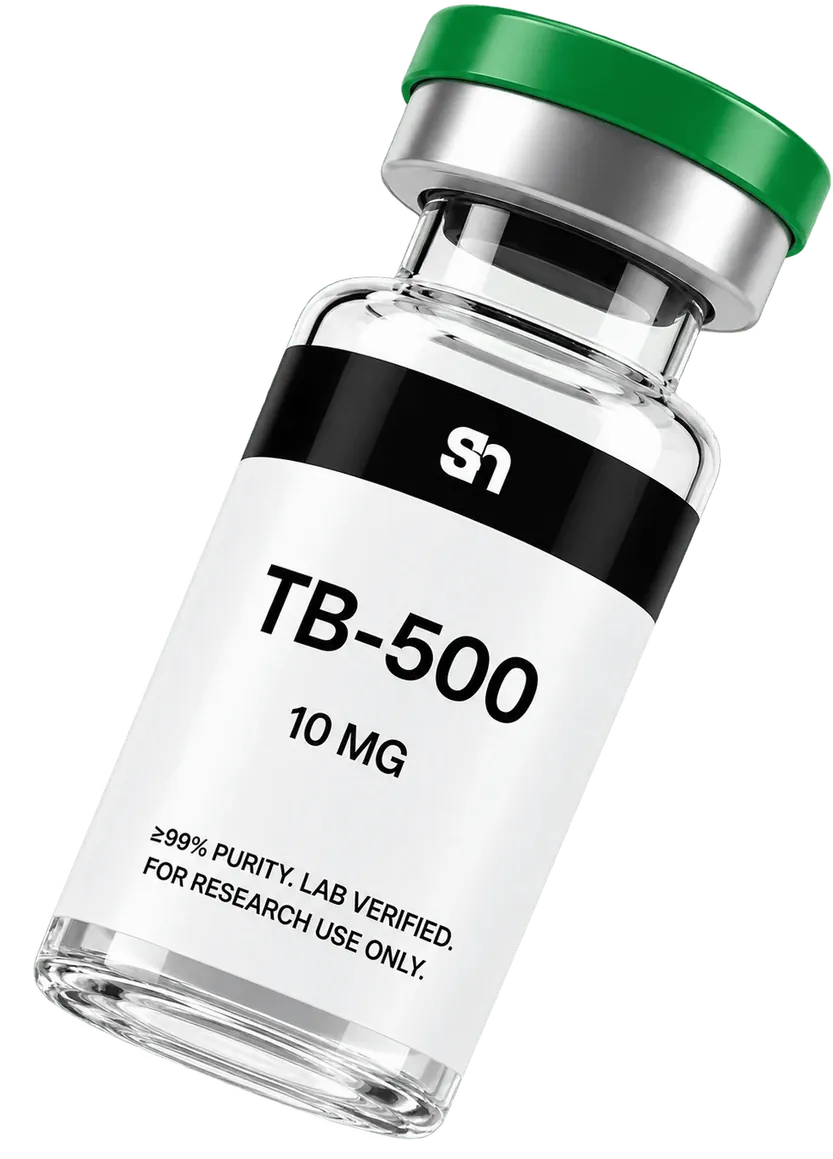
To buy BPC-157 in Kuwait from SHLabz, you order a sealed 10 mg vial that leaves the UAE the same working day before noon and reaches Kuwait in 2–4 working days for AED 60, free over AED 2,500, paid by card, Apple Pay or cryptocurrency.
Last updated 27 October 2026 · Written by the SHLabz research team
Kuwait sits at the northern end of the Gulf, so every SHLabz parcel bound for Kuwait City, Salmiya or Jahra crosses at least one border. That makes the paperwork as important as the vial. In addition, Kuwait’s Ministry of Health runs its own registration system for medicines, separate from the UAE’s.
This guide therefore starts with what arrives and who regulates it. Then it covers the compound, the certificate, the route to your door and Kuwait’s heat. Throughout, it describes laboratory research only, never effects in people.
Quick answer: To buy BPC-157 in Kuwait, order the sealed 10 mg vial from SHLabz before 12:00 UAE time on a working day. It ships in 2–4 working days for AED 60, or free over AED 2,500. Pay by card, Apple Pay or cryptocurrency. Kuwait’s Ministry of Health registers medicines, BPC-157 is research material only, and duties sit with the recipient.
Buy BPC-157 in Kuwait: The Vial That Travels
SHLabz lists BPC-157 as a 10 mg lyophilised vial. The wider range also includes pens, nasal sprays, serums and hair sprays. However, a pen or nasal spray holds a solution that needs 2–8 °C from the day it is filled, and GCC parcels travel without cold chain. So pens and nasal sprays stay in the UAE, and a Kuwaiti order arrives as the sealed vial.
That suits the format. Sealed freeze-dried powder is stable at room temperature when kept dry and out of direct light, because freeze-drying removes most of the water that drives breakdown.
Kuwait’s Ministry of Health and BPC-157
In Kuwait, the Ministry of Health oversees the registration of medicines. According to Al Tamimi & Company, its Department for the Registration and Control of Medical and Plant Based Medicines sets the registration requirements. In April 2023, Ministerial Resolution No. 100 added a new article to Resolution No. 361 of 2019 and repealed a 2022 resolution on importing non-registered medicines.
BPC-157 is not registered there. Indeed, the US Anti-Doping Agency states that no global health authority has approved it for human clinical use. Accordingly, SHLabz supplies BPC-157 strictly as laboratory research material.
Kuwait and Its Neighbours in 2026
Our search on 17 October 2026 found no Kuwait-specific public notice on peptides this year. Its neighbours, however, have moved. In August 2026, The Peninsula reported a Qatari Ministry of Public Health circular banning unlicensed peptide preparations, and it named BPC-157 among its examples. Then, on 30 September 2026, Saudi Arabia’s SFDA acted against online sellers of unregistered peptides. Jordan’s Food and Drug Administration (JFDA) warned on 3 September 2026 that it had closed more than 10 online pages and six gyms selling unregistered peptide products (Jordan News, 3 Sep 2026).
A “research use only” label describes how a product is offered. It is not a registration. So anyone who plans to buy BPC-157 in Kuwait should keep the order within laboratory work and keep the records that show it.
What BPC-157 Is
BPC-157 is a synthetic pentadecapeptide with the sequence Gly-Glu-Pro-Pro-Pro-Gly-Lys-Pro-Ala-Asp-Asp-Ala-Gly-Leu-Val and a mass of about 1,419.55 Da. A 2025 literature and patent review by Józwiak and colleagues traces it to a peptide isolated from human gastric juice, first described in 1993.
The same review is clear about the evidence base. Almost all of it is preclinical, mainly in rats and mice, with some toxicity and pharmacokinetic work in beagle dogs. One phase I trial in 42 healthy volunteers began in 2015, and its sponsors cancelled submission of the results in 2016. So no regulator holds a completed dossier to judge.
- Sport. The World Anti-Doping Agency lists BPC-157 under S0, non-approved substances, according to USADA.
- Literature. Our BPC-157 research guide covers the published models in more depth.
- Pairings. Researchers often study it alongside TB-500; see our BPC-157 and TB-500 guide.
The Certificate to Check Before You Buy BPC-157 in Kuwait
A certificate matters more after a border crossing, not less. For BPC-157, the current published certificate covers batch BC10/2026-0310, tested by Janoshik Analytical on 19 March 2026. It reports HPLC purity of 99.764% and measured content of 9.72 mg for a vial labelled 10 mg.
Put simply, purity is the main peak’s share of all the peaks detected. By contrast, content is the measured mass of peptide in the vial. The two answer different questions, so read both.
- Identity. Mass spectrometry compares the observed mass with about 1,419.55 Da expected for BPC-157.
- Batch. The batch on the report must match the batch printed on your vial.
- Verification. Janoshik states that every report in its database can be checked through the Verify tab on its site or the QR code on the report.
The certificate sits on our lab results page with a “Verify” link. That page now lists 13 products across 16 batches: SH-R, GHK-Cu, BPC-157, TB-500, MOTS-c, NAD+, KLOW Blend, CJC-1295 (no DAC), Ipamorelin, Tesamorelin, Selank, Epithalon and GLOW Blend. An independent laboratory tests every batch, and all batch figures are in the open SHLabz Purity Index.
Buy BPC-157 in Kuwait: From Order to Door
- Order before noon. First, an order placed before 12:00 UAE time on a working day leaves the same day.
- Allow for the working week. Next, SHLabz processes orders Monday to Friday, except UAE public holidays.
- Pay. Then choose card, Apple Pay or cryptocurrency. Tamara covers only the UAE and Saudi Arabia, and cash on delivery applies only in the UAE.
- Transit. After that, allow 2–4 working days to Kuwait.
- Customs. Import requirements and any duties are the recipient’s responsibility.
- Receive. Finally, check the seal and match the batch number to its certificate.
What It Costs to Buy BPC-157 in Kuwait
Delivery to Kuwait costs AED 60, and nothing on orders over AED 2,500. The current price of the vial is on the BPC-157 product page, because prices change. In addition, optional shipping protection costs AED 24.99 plus 5% of the order value at checkout, and it stays unticked unless you choose it.
Kuwait’s Heat and a Sealed BPC-157 Vial
Kuwait holds one of the highest temperatures ever verified on Earth. In June 2019, the World Meteorological Organization confirmed a reading of 53.9 °C at Mitribah on 21 July 2016. Summer afternoons there are an extreme test for anything left in a vehicle.
Cold chain covers UAE deliveries only, so a Kuwaiti parcel travels without gel packs. That is fine for sealed powder. Even so, a parcel should never sit in a parked car or on a sunny doorstep. So keep your phone on, receive it in person, and bring it indoors at once.
After Reconstitution
Once dissolved, the solution belongs at 2–8 °C and should never be frozen. Before then, avoid moving the sealed vial in and out of a fridge, because cold cycling invites condensation. Our storage and handling guide covers both stages.
Documents for Kuwaiti Research Labs
Kuwait has a long-standing applied research base. The Kuwait Institute for Scientific Research, founded in 1967 and made an independent public institution in 1981, runs an Environment and Life Sciences Research Center whose work includes biotechnology. Institutional buyers there will usually want the certificate, the invoice and the tracking record filed together.
So download the certificate before the parcel arrives, then log the batch number and the date received. Our Kuwait City guide and Kuwait supplier guide cover the wider buying picture.
Planning to Buy BPC-157 in Kuwait Across a Border
Because every parcel crosses a border, planning pays off. First, combine items into one order rather than several small ones, so one parcel clears customs and one person signs for it. Second, watch both calendars. An order placed after noon on a Friday leaves the following Monday, and public holidays in Kuwait can slow the final leg. Third, for a delivery in July or August, choose a delivery address where someone will be present all day.
A Checklist Before You Buy BPC-157 in Kuwait
- Batch certificate. First, a report for the exact batch you will receive.
- Named laboratory. Next, an independent lab whose record you can open yourself.
- Identity by mass spec. Purity alone does not prove which peptide is in the vial.
- Stock in the Gulf. A short route from the UAE means fewer days in transit.
- Honest storage claims. Anyone saying sealed powder must be frozen is wrong.
- Written terms. Then look for a stated window, fee and customs responsibility.
- Labelled vials. Name and batch on every vial, never a blank “stealth” label.
- Research framing. Finally, no approval claims and no human-use marketing.
Why Kuwaiti Researchers Order From SHLabz
- Short route. Stock in the UAE, 2–4 working days to Kuwait.
- Clear fees. AED 60, free over AED 2,500, with optional protection.
- Same-day dispatch. Orders before 12:00 UAE time leave that working day.
- Published BPC-157 certificate. Batch BC10/2026-0310, verifiable with Janoshik.
- Research-only framing. No approval claims and no human-use marketing.
The Short Version
To buy BPC-157 in Kuwait, order the sealed 10 mg vial before noon UAE time. It arrives in 2–4 working days for AED 60, or free over AED 2,500, paid by card, Apple Pay or cryptocurrency.
Meanwhile, Kuwait’s Ministry of Health registers medicines, and BPC-157 is not registered anywhere, so keep the order within laboratory research. Check the certificate for your batch, and keep the vial out of Kuwait’s summer heat.
Frequently Asked Questions
How long does it take to buy BPC-157 in Kuwait and receive it? Usually 2–4 working days after dispatch. Orders before 12:00 UAE time on a working day leave the same day.
Can I pay cash on delivery in Kuwait? No. Cash or card on delivery applies only in the UAE. Kuwaiti orders are paid by card, Apple Pay or cryptocurrency.
Is BPC-157 registered in Kuwait? No. No health authority anywhere has approved it, so SHLabz supplies it for laboratory research only.
Can a BPC-157 nasal spray or pen ship to Kuwait? No. Pens and nasal sprays need 2–8 °C, so they stay in the UAE. Kuwaiti orders ship as sealed vials.
Will Kuwait’s heat damage the powder? Sealed lyophilised powder is stable at room temperature. Still, never leave the parcel in a hot vehicle.
Who pays customs duties in Kuwait? The recipient. Import requirements and duties are the buyer’s responsibility.
Where is the BPC-157 certificate? On our lab results page, with a “Verify” link to Janoshik’s own record.
References
- Kuwait: Ministry of Health Restrictions on the Supply of Non-registered Medical Products — Al Tamimi & Company, May 2023. Resolution No. 100 of 2023 and Resolution No. 361 of 2019.
- WMO verifies 3rd and 4th hottest temperature recorded on Earth — World Meteorological Organization, June 2019. The 53.9 °C Mitribah reading.
- BPC-157: What Athletes Should Know — US Anti-Doping Agency, updated August 2026. No approval by any global health authority; WADA S0.
- Multifunctionality and Possible Medical Application of the BPC 157 Peptide — Literature and Patent Review — Józwiak et al., Pharmaceuticals, 2025. Sequence, origin and the preclinical evidence base.
- Qatar’s Health Ministry bans trading, use or promotion of unlicensed peptide products — The Peninsula, 27 August 2026. The neighbouring circular naming BPC-157.
Regulation in this area moves quickly. This article offers general information rather than legal advice, so anyone making a procurement decision with legal consequences should confirm the current position independently.
Finally, the catalogue lists every vial that ships to Kuwait, each with its batch details.
This article is provided for general research and educational purposes only. All SHLabz products are sold strictly for laboratory research use and are not intended for human or veterinary consumption, diagnosis, treatment, or prevention of any disease. Nothing in this article constitutes medical advice. Always consult a qualified professional and comply with applicable local regulations regarding the handling and use of research compounds.